A Mountaintop Experience

Today we’re going to start by reviewing the end of Mark 8.
On the road to Caesarea Philippi, Jesus asked His disciples an extremely important question.
First, Jesus asks them, “Who do people say that I am?” Then He follows it with what might be the most important question each one of us ever answers: “Who do you say that I am?”
Peter answers, “You are the Messiah.”
After that conversation, Jesus begins to teach the disciples about what will happen to Him in the near future: His death and resurrection. Peter takes Him aside and tries to correct Him, which shows us that the very same disciple who spoke up and said who Jesus was still did not understand what the Messiah had come to do.
Jesus rebukes him strongly, saying, “Get behind me, Satan.” May we never try to use our relationship with Jesus for our own purposes instead of surrendering to His.
In Mark 8:34–38, Jesus continues teaching His disciples that following Him means things must be done His way, not theirs.
34 Calling the crowd along with his disciples, he said to them, “If anyone wants to follow after me, let him deny himself, take up his cross, and follow me. 35 For whoever wants to save his life will lose it, but whoever loses his life because of me and the gospel will save it. 36 For what does it benefit someone to gain the whole world and yet lose his life? 37 What can anyone give in exchange for his life? 38 For whoever is ashamed of me and my words in this adulterous and sinful generation, the Son of Man will also be ashamed of him when he comes in the glory of his Father with the holy angels.”
Part of the reason I wanted to go back over these verses is because I have a confession to make. I’m not ashamed of Jesus, but there have been many times when I have avoided talking about Him in public places because I like to avoid conflict. Does that come across as being ashamed of Him? Is this difficult for you too? Let’s pray for each other, that we won’t be afraid to speak up for Jesus.
When Jesus talks about taking up our “cross” and following Him, He is talking about self-denial, repentance, and following Him even when it costs us something. Repentance is so important, even though it isn’t the most fun topic.
We love to talk about the love of Jesus. I love to talk about the love of Jesus. But Jesus does not call us to stay exactly as we are. He calls us to repentance. Repentance means we are going one way, and by God’s grace, we turn around and go the other way.
We can’t do any of this without the Holy Spirit. If Jesus’ words are stirring something in your heart, don’t ignore that. The Holy Spirit works through God’s Word to call us to repentance and faith.
9 Then he said to them, “Truly I tell you, there are some standing here who will not taste death until they see the kingdom of God come in power.”
We talked about what this means last week. Many commentaries connect this statement to the following passage about the transfiguration, which we’ll be reading next. The more I’ve thought about it, though, that explanation does not seem quite right to me because of what Jesus had just said about coming in the glory of His Father with the holy angels. Ultimately, this is the kind of thing I sometimes get caught up in, while missing the main thing God is trying to teach me.
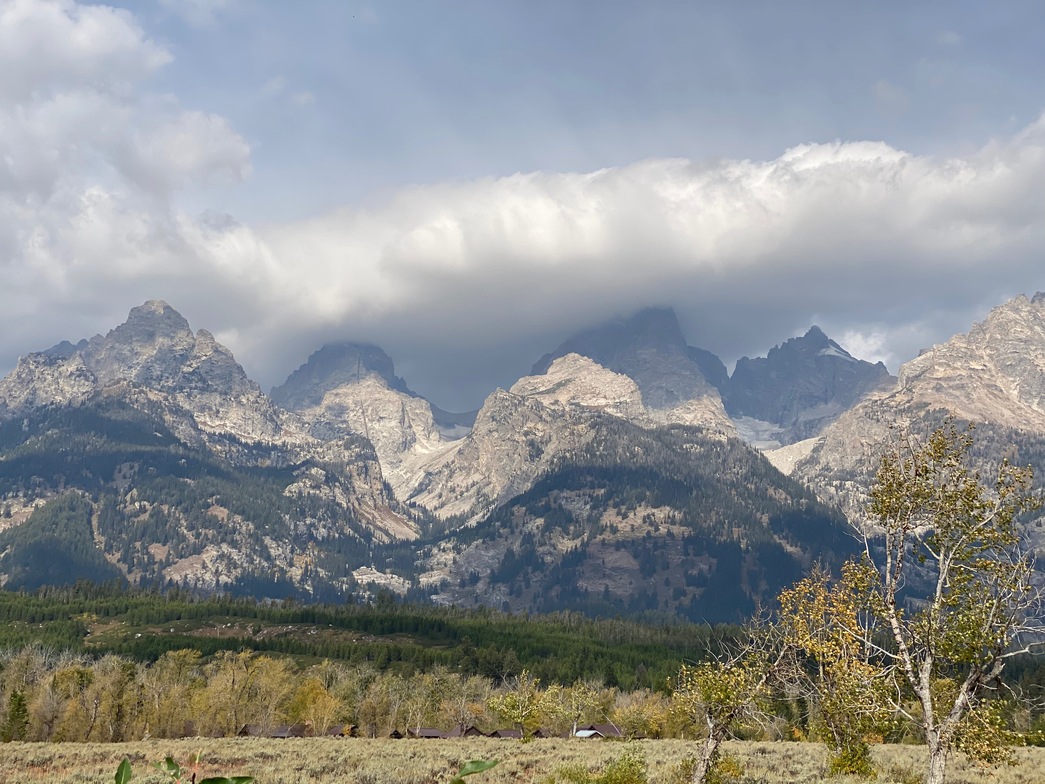
Let’s move on to the passage often called “The Transfiguration.” To be transfigured means to be changed completely from one thing into another.
2 After six days Jesus took Peter, James, and John and led them up a high mountain by themselves to be alone. He was transfigured in front of them, 3 and his clothes became dazzling, extremely white as no launderer on earth could whiten them. 4 Elijah appeared to them with Moses, and they were talking with Jesus. 5 Peter said to Jesus, “Rabbi, it’s good for us to be here. Let’s set up three shelters: one for you, one for Moses, and one for Elijah,” 6 because he did not know what to say, since they were terrified.
7 A cloud appeared, overshadowing them, and a voice came from the cloud: “This is my beloved Son; listen to him!”
8 Suddenly, looking around, they no longer saw anyone with them except Jesus.
Mark 9:2–8
There is an interesting theory related to the transfiguration that is a little “time travel-ish.” I would not build doctrine on it, obviously, but it is an interesting idea to think about.
Who created time and space? God did, obviously. That means He is not limited by time and space the way we are. The theory is that Moses, Elijah, and Jesus were each meeting with God on a mountain in their own time, and somehow those moments intersected at the transfiguration. Again, this is just a theory, not something we can prove from Scripture, but it is interesting to think about. Side note: many ancient civilizations had stories about people meeting with gods on mountains.
First, think about Moses meeting with God on Mount Sinai.
In Exodus 33, Moses meets with God on Mount Sinai. The passage says, “The Lord would speak with Moses face to face, just as a man speaks with his friend.” Then, a little further on in verse 18, Moses says, “Please, let me see your glory.”
Then in Exodus 34:29–31, after Moses comes down from Mount Sinai, his face is shining because he had been speaking with the Lord. Aaron and the Israelites are afraid to come near him, but Moses calls them back and speaks to them. When I read about Moses’ face, I can’t help but think about how Jesus is described during the Transfiguration.
Next, think about Elijah meeting with God on a mountain.
1 Kings 19:11–13 tells us, “Go out and stand on the mountain before the Lord, for the Lord is about to pass by.” There was a great wind, then an earthquake, then a fire, but the Lord was not in those things. After the fire, there was a soft whisper. When Elijah heard it, he wrapped his face in his mantle and went out and stood at the entrance of the cave. Then a voice came to him and said, “What are you doing here, Elijah?”
So the theory is that when Jesus met with Moses and Elijah on the mountain, those moments were somehow connected across time. Again, it’s only a theory, but clearly there is something significant about meeting with God on a mountain.
The Bible tells us that Jesus chose three disciples to be with Him during the Transfiguration: Peter, James, and John.
There is no doubt this moment had an effect on them. Later, Peter writes about this experience in 2 Peter 1:16–18 as part of his explanation for why we can trust the apostles’ testimony.
Peter says they were not following “cleverly contrived myths,” but were “eyewitnesses of his majesty.” He remembers hearing the voice from heaven say, “This is my beloved Son, with whom I am well-pleased,” while they were with Jesus on the holy mountain.
John does not specifically describe the Transfiguration in his Gospel, but I do think John 1:14 may echo what he saw there: “We have seen his glory, the glory of the one and only.”
Meeting Jesus on His terms is life-changing in the best possible way. Trying to follow Jesus on our own terms will eventually lead to correction, if we are willing to hear it. My prayer for each of you is that you will hear the Spirit when He is speaking to you, pick up your cross, and follow Jesus day after day.

-
Our Saviour's Evangelical Lutheran Church